In love with the looks, but ready for everything that comes with them? (English version)
- Categorie: Blog
Those irresistible curls, that unusual coat colour, those short little legs or that rugged appearance. That heartbreaking photo of a dog sitting in a kennel somewhere abroad. You were smitten. Hook, line and sinker.
But have you stopped to think about the dog you’re actually bringing into your home?
Behind that adorable face is not a cuddly toy you can mould to fit your lifestyle. It’s a dog with instincts, genetic predispositions, an individual temperament and needs that have often been shaped over generations.
A Dachshund isn’t just a dog with short legs. A Husky isn’t a walking teddy bear. And a Border Collie isn’t simply a clever family dog. And that (white) livestock guardian dog from Greece? Cute for now, perhaps, but don’t be surprised if, in a few months’ time, it decides Grandma is no longer welcome in the house.
You’re choosing a dog. And with that comes everything that makes that dog who they are. Even when it doesn’t quite fit the picture you had in mind.
Your Dog Is More Than Just Its Looks
For generations, dogs have been selectively bred for their ability to work, hunt, track, guard, herd and retrieve.
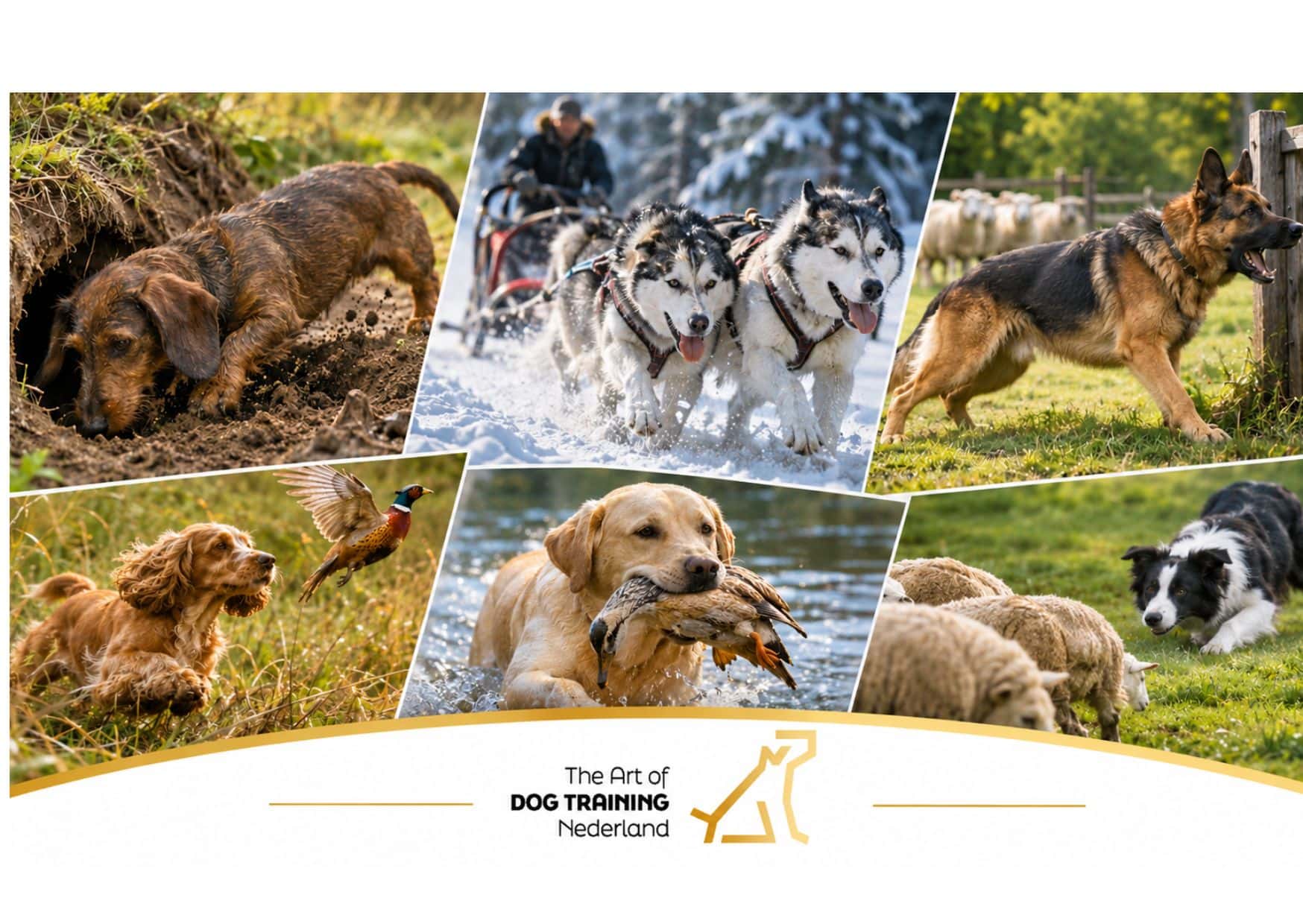
- Your Dachshund was bred to work underground and take on badgers independently. It was also bred to bark loudly so the hunter could locate it. That broad chest? It’s a rather impressive little sound box!
- Your Husky was bred to pull sleds in extreme conditions.
- Your German Shepherd was bred to work, herd and protect.
- Your Cocker Spaniel was bred to work through dense undergrowth and flush out game.
- Your Labrador was bred to retrieve game, including from water and across difficult terrain.
- Your Border Collie was bred to herd livestock and control movement.
- Livestock guardian dogs were bred to work independently and make their own decisions.
And then we’re surprised by their drive, energy, independence, determination or hunting instincts? We even go as far as labelling these perfectly natural behaviours as “problem behaviour”.
Today, these dogs often live in residential neighbourhoods, spend their days lounging on the sofa and go out for their daily walks. They get fed twice a day from a bowl. We expect them to fit seamlessly into our modern lifestyles, but don’t always take their original purpose into account.
A dog that digs, barks, hunts, herds, runs or likes to make its own decisions is quickly labelled hyperactive, stubborn or difficult.
But do we ever stop to consider what we’re actually asking these dogs to do?
What Makes Your Dog Who They Are?
Behaviour is shaped by an interaction of several different factors. Four of them play a particularly important role.
1. Learning: Your Dog Is Learning All Day, Every Day
Not just during training sessions. Every walk, encounter and everyday situation provides new experiences. Your dog learns from your reactions, other dogs, people and everything else it encounters.
What works? What’s rewarding? What’s frightening? What should I be cautious about?
Even when you’re not consciously training your dog, it’s still learning. Sometimes it’s even learning exactly the things you’d rather it didn’t!
2. Environment: It’s About More Than Just Your Home
Your dog’s environment has a huge influence on its behaviour. Think about:
- The atmosphere and relationships within the household.
- Interactions with people, children and other animals.
- The amount of stimulation and opportunities to switch off.
- Rest, predictability and everyday experiences.
A busy, unpredictable environment has a very different impact on a dog from a calm, stable one.
3. DNA: Genetic Predispositions Don’t Simply Disappear
Hundreds, sometimes thousands, of years of selective breeding don’t suddenly disappear just because your dog now lives in a suburban home. After all, we’ve spent centuries carefully breeding dogs to help us with all sorts of jobs in our daily lives.
A Dachshund or Terrier may still have a strong instinct to dig and work independently, often accompanied by plenty of barking. A Border Collie may be highly sensitive to movement and won’t necessarily appreciate your visitors getting up to go to the loo. A Husky may have an enormous need for exercise and independence.
Genetics doesn’t determine everything, and every dog is an individual. But genetic predisposition absolutely plays a part.
You can guide behaviour and help your dog learn to manage its instincts. But you can’t expect a hunting dog to simply switch off its hunting instinct, or a dog with a strong herding drive to suddenly lose the urge to herd.
Not just because that’s what you’d prefer.
4. The Individual: No Two Dogs Are Alike
Even puppies from the same litter can turn out to be remarkably different. Temperament, sex, health and physical abilities all play a part. But so do circumstances that begin long before a puppy is even born.
Think about:
- The conditions during pregnancy.
- The mother’s physical and mental wellbeing.
- Influences passed down through previous generations.
- The circumstances surrounding birth.
- The first weeks of life and early experiences.
- Nutrition, health and subsequent development.
All these factors help shape the dog standing in front of you. Every single dog!
A breed description isn’t an instruction manual, and a pedigree doesn’t tell you the whole story. Mother Nature has a say in things too.
Beautiful Doesn’t Always Mean Healthy
We’re easily influenced by appearance. An unusual colour, a full curly coat, short legs, a flat face or a dog that’s as tiny as possible. The cuter they look, the more oxytocin our brains release. But how far are we prepared to go to get that picture-perfect dog?
Take the increasingly popular Doodles, for example.
The original Labradoodle is a cross between a Labrador Retriever and a Poodle. Two intelligent breeds with a strong working and hunting background. In fact, Poodles have even been used by the police and military.
Those gorgeous curls tell you absolutely nothing about a dog’s health, temperament or needs. And no, just because a breeder promises a hypoallergenic dog doesn’t mean one actually exists. But it’s certainly a good selling point!
And What About the Growing Demand for Smaller and Smaller Dogs?
The demand for extremely tiny dogs can come at a cost to their health. Think fragile bones, joint and kneecap problems, dental issues and complications during pregnancy and birth.
In some extremely small dogs, even the brain can be too large for the skull, potentially resulting in chronic headaches and ongoing discomfort.
But hey, they’re adorable. So surely it can’t be that bad?
Not every small dog is unhealthy. But are we really going to keep breeding dogs smaller and smaller for our own convenience? Just so they can fit neatly into a handbag and accompany us wherever we go?
But is that actually what the dog wants? Being carried around in all the hustle and bustle? At the office? Even when it might not be feeling particularly well?
And Then There’s the Popular Merle Coat Pattern
Those unusual colours and distinctive patterns certainly make merle dogs attractive. But once again, understanding genetics is essential.
When two merle dogs are bred together, puppies that inherit the merle gene from both parents have a significantly increased risk of congenital abnormalities, including serious hearing and eye problems.
A striking coat colour should never come at the expense of a dog’s health.
Thinking of Buying a Puppy? Look Beyond the Cute Photos, the Adorable Dog Next Door and Get Advice from a Professional.
A beautiful website, professional photographs and lovely stories about a breeder’s love for the breed are no guarantee of responsible breeding.
Ask about the health screening carried out on both parents. Check the results and find out about hereditary conditions within the bloodlines. Learn about the temperament of the parent dogs and take a good look at the conditions in which the puppies are being raised.
And ask yourself:
- Does this breed’s temperament suit my experience with dogs?
- Can I meet its exercise and mental stimulation needs?
- Am I prepared to manage its natural instincts?
- Do I have enough time for raising, training and guiding this dog?
- Will this dog still fit into my life and future plans?
And perhaps the most important question of all:
Am I choosing this dog because it’s the right fit for me, or simply because I love the way it looks?
A responsible breeder will ask you just as many questions and be honest about the breed’s characteristics, temperament and potential health risks.
Are you only allowed to see the puppy once before being told you can take it home straight away? DON’T DO IT!
Don’t be swept away by sales talk and adorable puppy pictures. Take the time to find out exactly where you’re getting your dog from. Yes, that might mean joining a (long) waiting list. And that’s perfectly fine.
Already Have a Dog? Learn to Understand Them Better.
Perhaps you’re starting to recognise certain traits in your own dog. Behaviour that used to frustrate you might suddenly make a lot more sense.
Take an honest look at your own expectations. Does your dog have enough opportunities to express its natural behaviours? Does it get enough downtime? Does your approach to raising and training your dog actually match its personality and needs?
Of course, you don’t need to go hunting for badgers and foxes with your Dachshund, buy a flock of sheep for your Border Collie (although it would probably think that’s a brilliant idea), or hitch a sled to your Husky.
But you can provide appropriate outlets for their natural instincts and needs.
Think sniffing, searching, tracking, retrieving, problem-solving, working together, chewing and, just as importantly, plenty of rest.
It’s not about keeping your dog constantly occupied. It’s about offering activities that genuinely meet its needs.
And Now It’s Your Turn…
We have an enormous influence on how our dogs live their lives. Where they live, what they eat, which experiences they have and what opportunities they’re given. That comes with responsibility.
Whether you’ve had dogs for years or are still looking for your very first puppy: learn about the breed, look beyond appearances, take health seriously and, above all, get to know the individual dog.
Stop asking only what your dog needs to learn. Start asking yourself what you need to learn about your dog.
Because raising a dog doesn’t start with demanding the behaviour you want to see. It starts with understanding the dog you’ve brought into your home.